


Spain

Spain is one of the largest and most bio-geographically diverse countries in Europe, lying at the crossroads between Europe and Africa, with conditions ranging from the oceanic north to the semi-arid south-east, and the sub-tropical Canary Islands. The country is very mountainous, with the highest average elevation in the EU.
Spain has vast areas of low-intensity farming, involving traditional livestock raising on semi-natural pastures, extensive arable systems with long fallow periods, and traditional orchards of olives, almonds and other fruit and nut trees. These types of farming have become known in Europe as "high nature value" farming. For more on these farming systems in Spain and other countries, see our book High Nature Value farming in Europe.
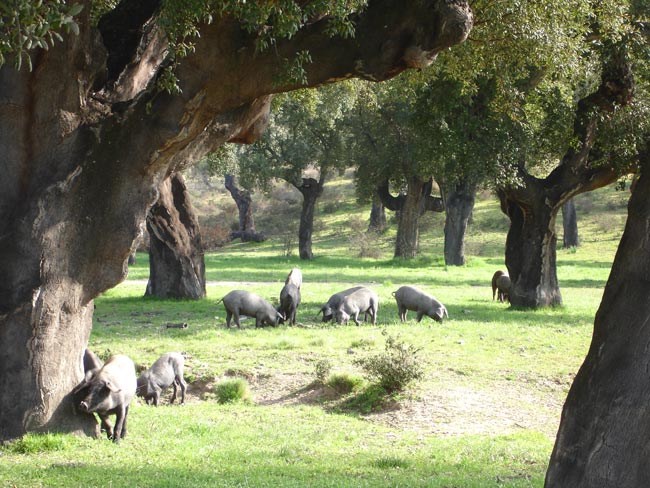
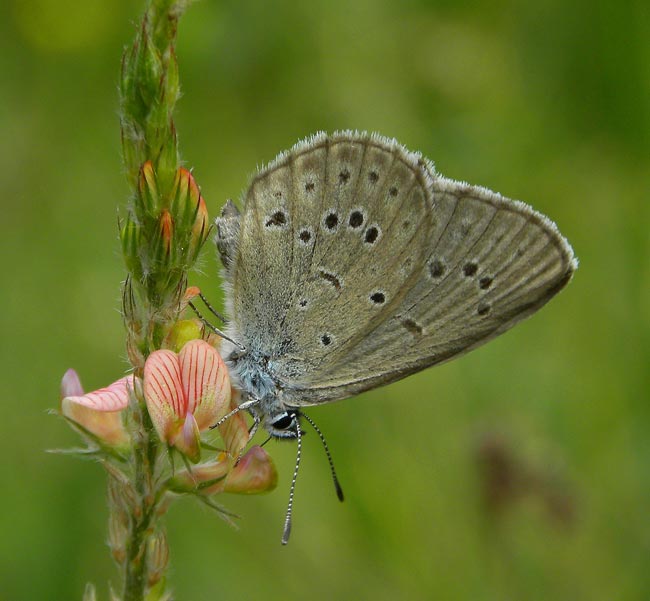
Much of Spanish farmland is still associated with species that disappeared long ago from more intensively farmed regions of Europe, such as the marsh fritillary butterfly, birds such as the great and little bustards, the wolf and the brown bear. The world's most endangered feline, the Iberian lynx, depends for its hunting grounds on the wooded pastoral landscape (dehesas) maintained by traditional livestock farming.
What are the main challenges?
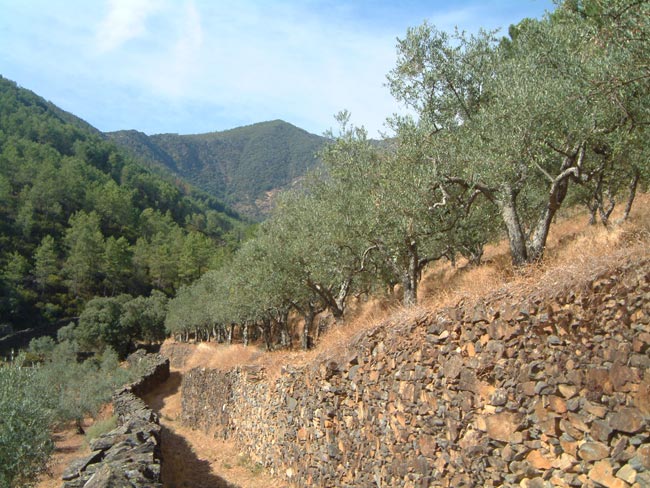
Nature in Spain is threatened by the decline of low-intensity farming, with a parallel process of abandonment on poorer land and intensification on better land. Afforestation has added to the losses in some regions, while major infrastructure projects (roads, dams, building development) have destroyed and fragmented some highly valued landscapes.
While the protection of the biodiversity "hotspots" has progressed to some extent (mainly thanks to EU legislation), the steady loss of High Nature Value farming has not been widely recognised or addressed. Abandonment is accelerating with changes to the CAP, and wild fires have become a major environmental problem, especially in areas that have been abandoned and/or afforested.
The CAP and other EU policies are major drivers of landuse in Spain. But the national and regional governments have made only limited efforts to use positive EU measures, such as agri-environment incentives, to support HNV farming systems, preferring to use funds for intensifying farming, for the processing industry, and for afforestation.
What is EFNCP working to achieve?
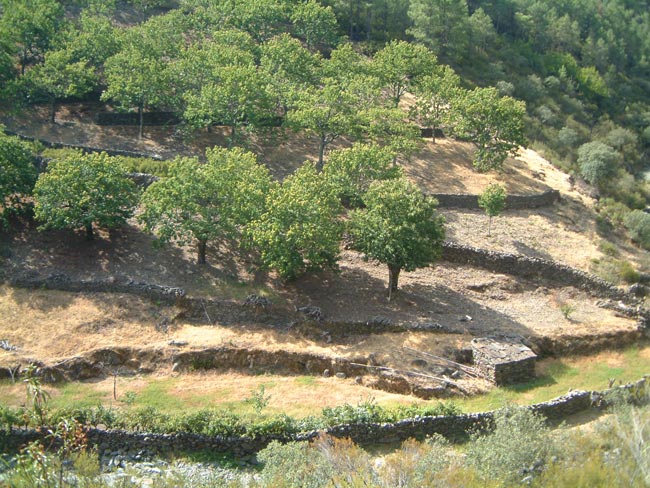
There is a growing mobilisation in Spain of interest in maintaining extensive livestock systems, as well as in the sustainability of traditional olive orchards. There are many local projects and associations working to support these activities, and institutions researching the tendencies affecting the farming systems. However, these initiatives often have little engagement with the policies that drive rural land use, especially the CAP, or with the regional and national policy makers that could be doing so much more to make use of EU funds for supporting HNV farming.
EFNCP's aim is to help local, regional and national organisations to engage in influencing policy development both through the EU institutions in Brussels and with national governments. By doing so, we aim to achieve benefits for HNV farming, farmers, and the nature they maintain, on a scale beyond the impact of small local projects.
Projects in Spain

Thanks to the Life-NGO grant from the European Commission, the EFNCP supported several projects in Spain in 2015. Through our member Entretantos, we contributed to the animation and communication activities of the Spanish Platform for Extensive Livestock and Pastoralism, including the event "Grazed territories: sharing our experience on supporting best farming practices for environmental conservation". Entretantos contributed to other parts of our work programme, such as the production of videos, HNV system studies and international seminars.

EFNCP has established a new partnership with QueRed, the Spanish network of artisan and farmhouse cheese producers. Thanks to this collaboration, in 2015 QueRed gave support to future cheesemakers, organising tasting sessions of “endangered” cheeses, informing about regulations and, most importantly, working for the approval of two national proposals that are key for the future of small-scale cheese dairies in Spain. Such dairies are crucial for the economic sustainability of some HNV grazing systems, such as this example of a farm in Salamanca province.

In 2015 we worked with Trashumancia y Naturaleza, an organisation specialised in giving support to transhumant farmers. Main objectives of this collaboration are to defend the integration of silvo-pastoral rangelands into the CAP, with rules and measures properly adapted to the characteristics of these pastures in Spain, and to reinforce networking and policy awareness raising by common land pastoralists.
In Extremadura we continued our project with local volunteers for monitoring butterfly species associated with upland grazing systems in the central mountains, with support from Miguel Munguira of Madrid University. This project is now part of a much-expanded Spanish Butterfly Monitoring Scheme, which EFNCP played a part in initiating, in collaboration with Butterfly Conservation Europe (BCE). For the latest news from the EFNCP transect and on the wider scheme, see Butterfly Monitoring in Spain.
Finally, building on the work done in previous years (see below), Navarra is one of the three pilot areas of the ongoing EFNCP-led European project on Results-based agri-environment payment schemes (RBAPS).
Other recent collaborations

In Navarra (northern Spain) we have worked for several years with the regional government and Gestión Ambiental de Navarra to develop "HNV farming indicators". This involved building up a picture of which existing farming systems are of most value for nature, what are the trends affecting these systems, and how could they be supported through EU policy instruments.
In Andalucía we teamed up with an EFNCP member - Pastores por el Monte Mediterráneo - an association of scientists, shepherds and regional government staff who are working to maintain extensive livestock grazing. A key focus of their work is rewarding the essential service shepherds and their flocks provide in reducing the risk of wild fires. We produced policy proposals for the regional government based on a consultation with extensive livestock farmers, environmental experts and other stakeholders.
We have also worked with WWF Spain in three pilot areas of central and southern Spain to identify High Nature Value (HNV) farming systems and develop land management contracts with HNV farmers.
In 2012 EFNCP supported a programme of hands-on workshops for school children in the areas of Cabo de Gata-Níjar Natural Park (Almería), and Sierras Tejeda, Almijara y Alhama Natural Park (Málaga). Spanish school children learned why we need shepherds. During a total of 3 days of interactive games, participation and demonstrations, the children learnt all about the local landscape and wildlife, and the role of grazing and shepherding in creating and maintaining this landscape.